One of the first things people ask me is a very reasonable question: "So what do you actually do on the day?"
As if a wedding celebrant is someone who turns up, reads some words, and leaves. (Gentle correction: I do leave at the end — but the ceremony you hear on the day is usually the last thing I do for you, not the main thing.)
So let me walk you through the whole journey, from the first "hello" to the moment you're declared married. Because the honest answer is that I write, plan, craft and lead — and most of it happens long before you ever see me.
It starts with getting to know you — not a form
When you make an enquiry, I'd like to have a proper conversation with you both. A call, or a video call if you're still back in the UK — whichever feels easier. I'm not taking a booking; I'm getting to know a couple.
How did you meet? What are you like? What does your ideal ceremony feel like — emotional, funny, dignified, a little of everything? Do you have songs, places, people or memories that feel yours? That conversation is where your ceremony actually begins, because a good ceremony isn't written from a questionnaire. It's written from a couple.
The writing — where your ceremony comes to life
This is the heart of the job, and the part I live for.
I write your ceremony from scratch, entirely around you. No template, no two ceremonies alike. We'll talk through the shape of it together:
- The welcome — how your guests arrive into the moment
- Your story — told the way you two would tell it: where it started, what it survived, what it's become
- Your vows — yours, in your words. If you want to write them yourself, I'll help you find the words (more couples than you'd think find this harder than it sounds — it's normal). If you'd like me to draft them from everything you've told me, I can do that too
- Readings — a poem, a song, a passage from something meaningful, or words from a parent, a friend or a grandparent you'd love to hear on the day
- Rituals — a unity candle, a sand ceremony, a ring warming, a cultural or faith-inspired element, a letter to be opened in five years. Rituals are the details guests remember years later
- A little humour, if it's you — the best ceremonies make people cry and laugh. Most of my couples want both, and I build both in
- The pronouncement — the moment the room exhales and everyone turns to look at you
You see everything I write. We refine it together until it sounds like you — because it should.
The week before — when a ceremony becomes effortless
A ceremony feels effortless on the day because of what happens beforehand. In the run-up, we finalise the order of the ceremony, the music cues, the timings, who's where, who says what. If you'd like a quick walk-through with the people taking part, we'll do that too.
If your wedding includes a legal part as well — and if you're wondering how the legal process works in Portugal, I've written a full guide to it — I coordinate that alongside the ceremony, so the two halves of your day fit together cleanly rather than feeling like two events.
And if you want to be completely off the hook on the day itself — vendors, timings, the whole moving machine — I also provide wedding day coordination as part of my service, so the day runs without you having to manage a thing. You can see the full details of my services here.
The day itself
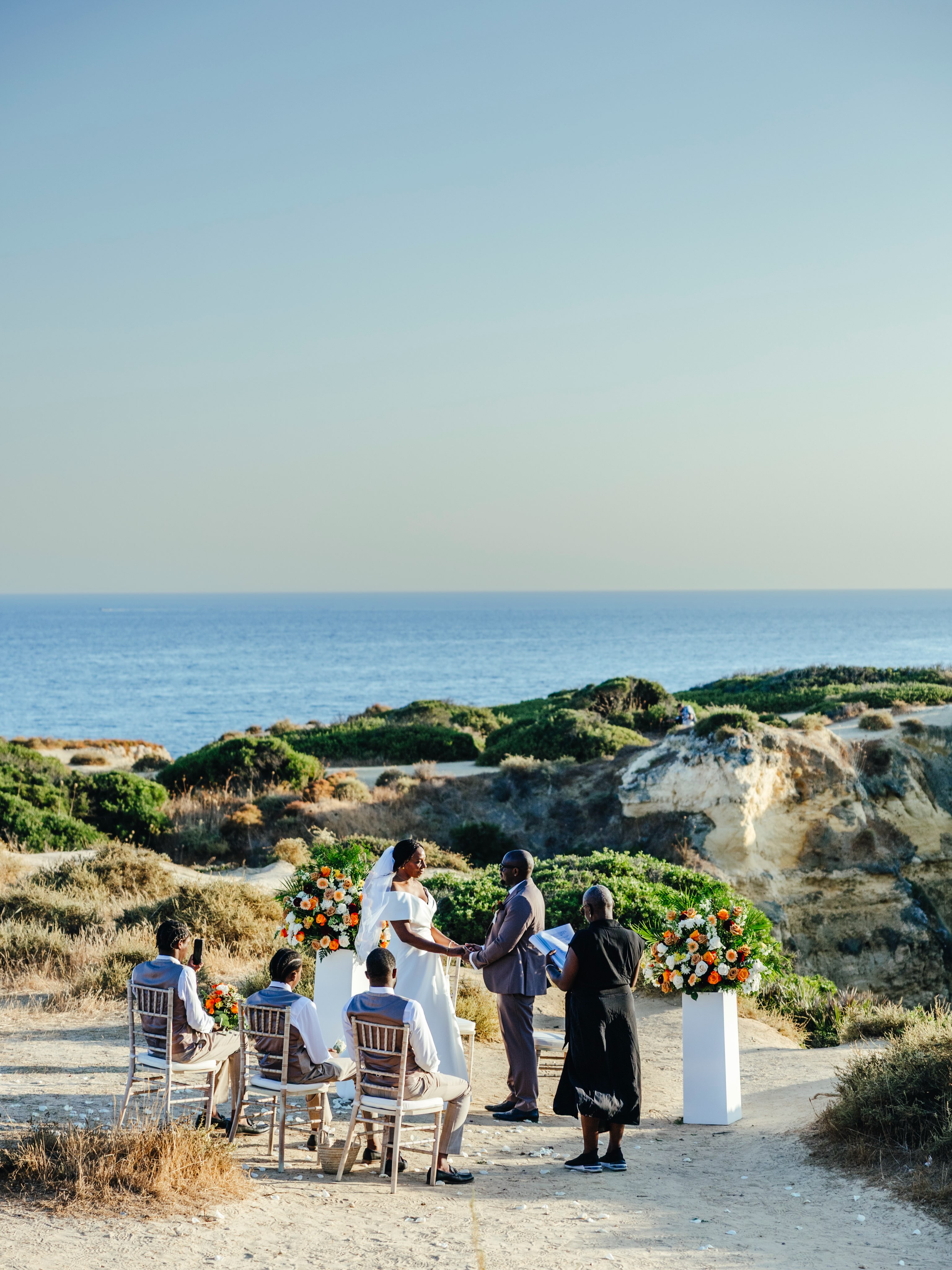
I arrive well before the guests, set everything up, and check that every person who has a part to play knows exactly what's happening. Then, when the moment comes, my job is simple: I guide you and your guests through every step.
The music starts, people find their places, the readings are given, the vows are said, the rings are exchanged — and I hold the shape of the day in my head so you don't have to. You get to be in your wedding, not behind the controls of it. That's the difference between a ceremony that's simply performed and one that actually feels like yours.
Celebrant or registrar? What's the difference in Portugal?
This question comes up a lot, so here's the plain version:
- A registrar is the official civil celebrant. A ceremony conducted by a registrar is legally binding.
- A celebrant — that's me — creates and leads the personal, written-for-you ceremony, which is symbolic.
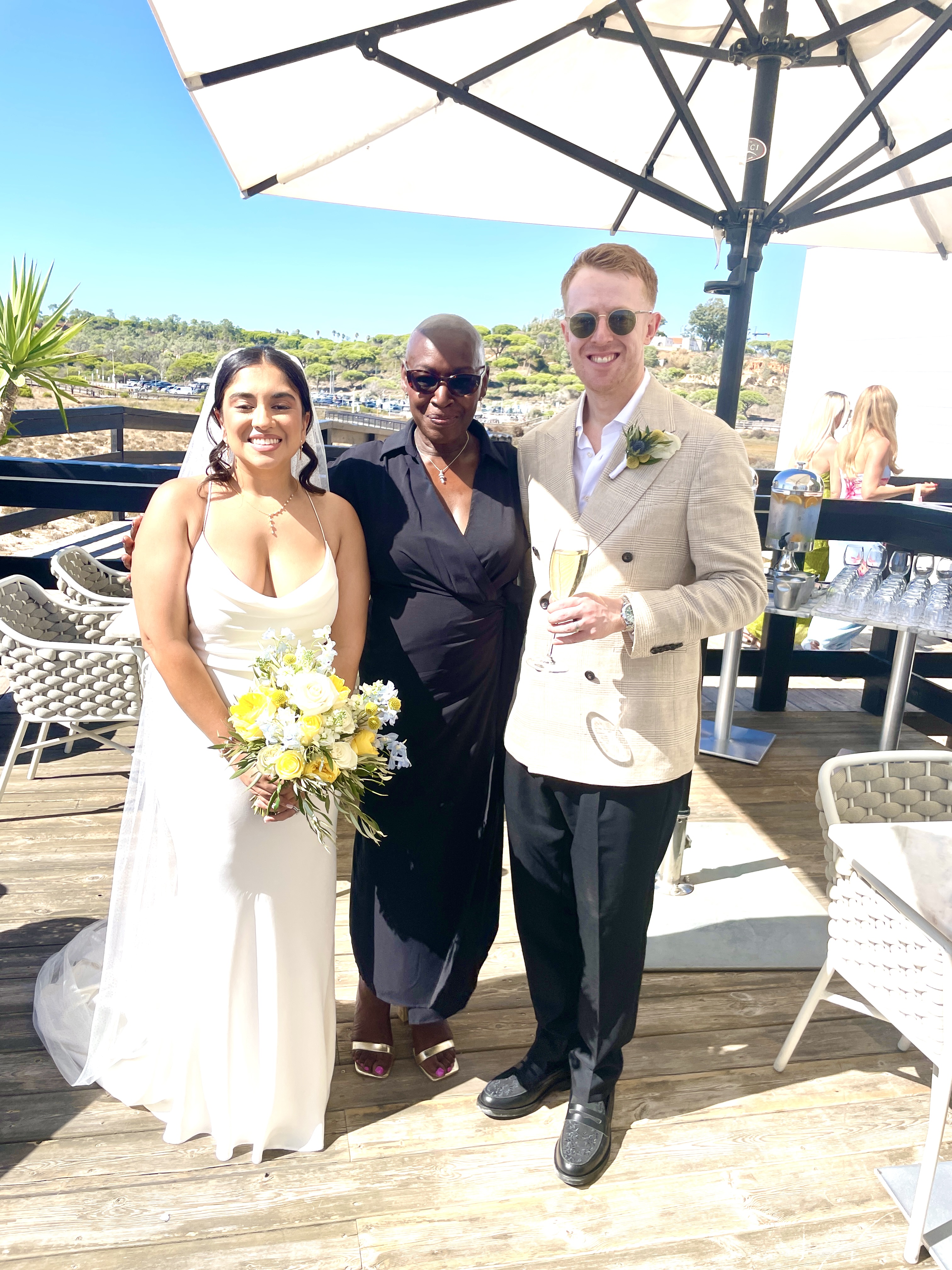
Many couples do both: the legal part with the registrar (often in the morning), and the symbolic ceremony with me later, on the beach or at their venue, where the words actually come from their lives. Here's my full guide to the legal side, if you're considering it.
Why it matters who writes your ceremony
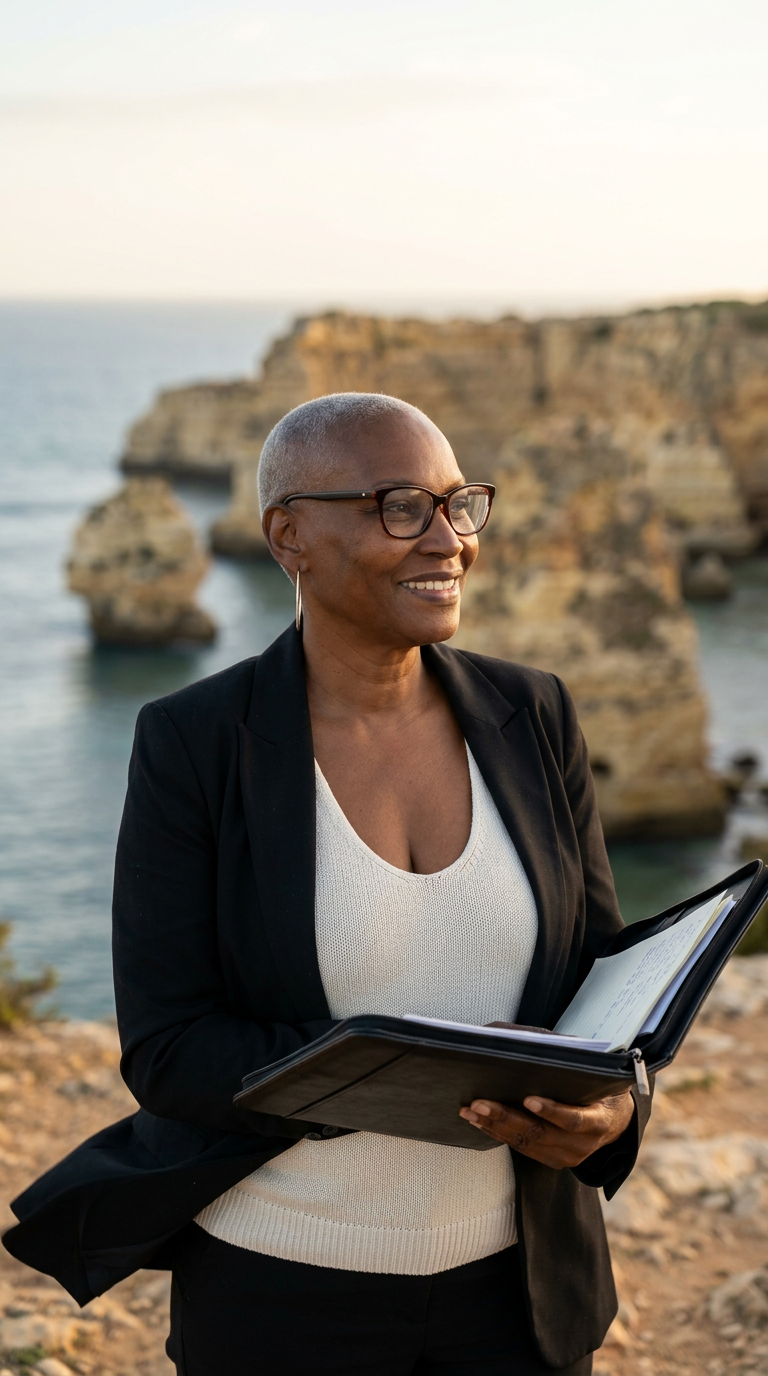
The ceremony is the one part of a wedding that is only about you two — no guests, no suppliers, no logistics. It's the part people will still be describing at the dinner party years later. It deserves someone who takes it seriously: part writer, part host, part calm voice when everyone else is slightly in a swirl.
That's who you're hiring when you hire a celebrant. Not just for the day — for the story of the day.
One of my favourite moments so far:
[Alisia: add 2–3 sentences of a real story here — a moment from a ceremony that made you proud of this work. A couple's reaction, a line from a vow, a place. Specifics are what make this section work.]
Your most common questions
Do you travel to venues across the Algarve and Lisbon?
Yes — I work across both regions, from beaches to villas to city terraces. Tell me your venue and I'll tell you what works.
How far in advance should we book a celebrant?
Most couples book between six and twelve months ahead, particularly for peak season. If your date is closer than that, still get in touch — last-minute bookings can sometimes be accommodated.
Can our ceremony be funny?
The best ones are funny and moving. Tell me your sense of humour and I'll match it — I'd rather have a warm, real ceremony with a little laughter than a stiff one that makes everyone cry on cue.
What language is the ceremony in?
English. I specialise in English-language ceremonies for international couples marrying in Portugal.
Can you help with the legal side too?
Yes — I arrange the paperwork, the registrar and the translations, so the legal part never becomes your problem.
I'd love to hear about your day
If you're planning a wedding in the Algarve or Lisbon — or a vow renewal, or an elopement, or something you haven't seen done before — tell me about it. Your date, your dream setting, and how you met.